
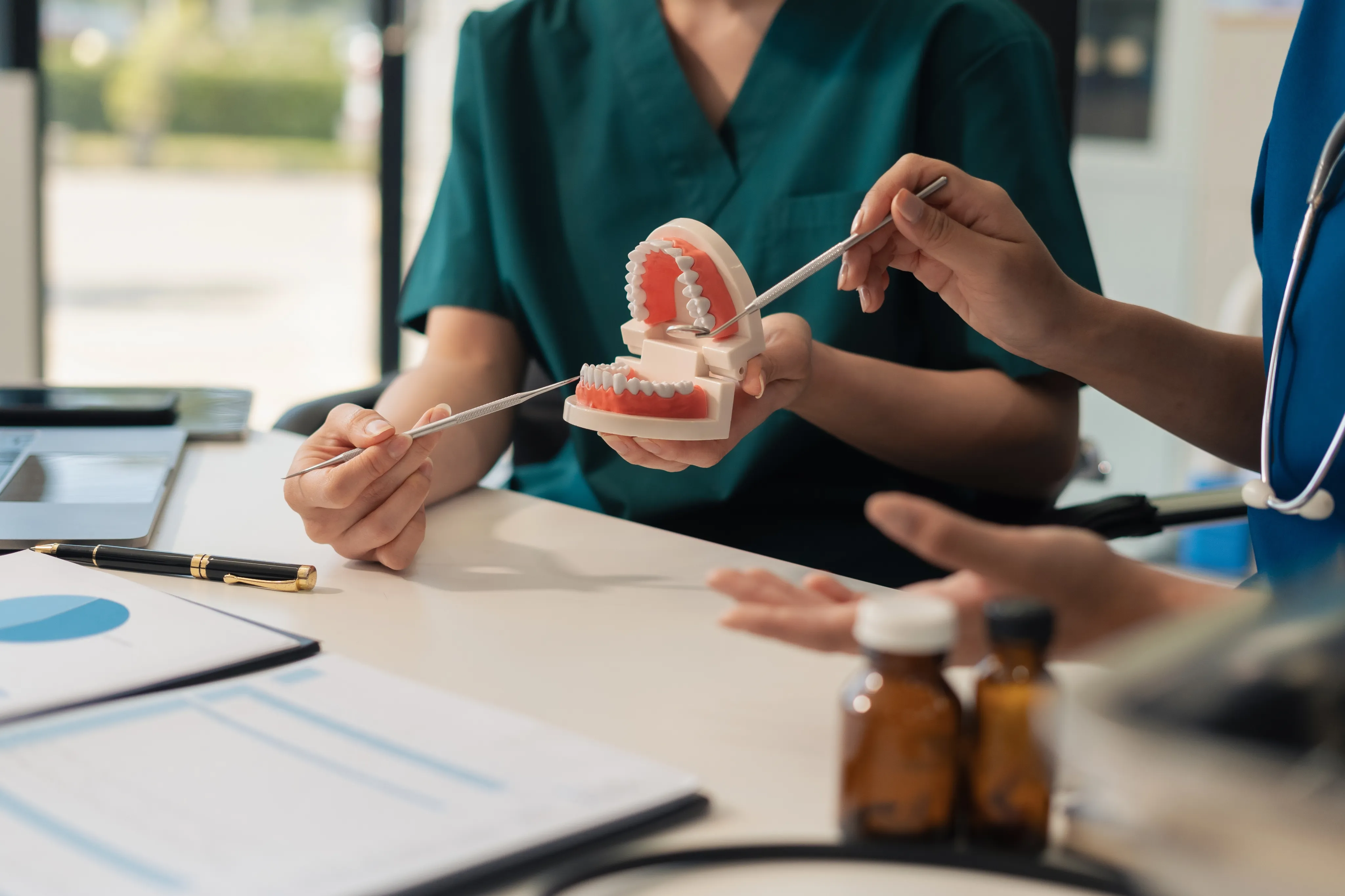
Implant-supported dentures in Memphis, Tennessee, combine the stability of dental implants with the coverage of a full or partial denture. Patients often consider this option when traditional dentures feel loose, affect speech, or limit chewing. This page outlines how treatment works, who may be a candidate, expected healing timelines, and day-to-day care so you can make an informed decision before scheduling a consultation.
Implant-Supported Dentures Explained
Implant-supported dentures use small titanium posts placed in the jawbone to anchor a custom denture. The implants act like artificial tooth roots. Over several months, the bone bonds to the implants in a process called osseointegration. An attachment system—either a bar, locator snaps, or screws—then connects the denture to the implants for secure function.
There are two main styles. A removable overdenture “snaps” on and off the implants for cleaning. A fixed full-arch bridge stays in place and is removed at the dental office when needed. Both designs reduce denture movement and can improve bite strength compared to traditional dentures. The right choice depends on bone quality, oral hygiene habits, dexterity, and personal preference.
Advantages of Implant-Supported Dentures
- Improved chewing power for a wider range of foods.
- Stable fit that minimizes slipping and sore spots.
- Bone preservation that helps maintain facial support.
- Clearer speech due to a more secure restoration.
- Reduced need for messy denture adhesives.
- More natural feel compared to traditional dentures.
- Long-term value with proper care and maintenance.
How Implant-Supported Dentures Work
Planning and Placement
The process starts with an evaluation, including a 3D scan and dental impressions. The treatment plan outlines how many implants are recommended per arch—often between two and six depending on the design. Implants are placed in the jaw under local anesthesia, with sedation available when appropriate.
Healing and Provisional Teeth
Most patients heal for about three to six months while the implants integrate with the bone. Many people can wear a modified denture during this period. In select cases, a temporary implant-supported prosthesis may be placed the same day, but this depends on bone quality and bite forces.
Final Restoration and Attachment
After healing, precision attachments or abutments are connected to the implants, and detailed impressions are taken. A custom denture or full-arch bridge is fabricated to match your bite and smile. Our dentist will then attach the final prosthesis and fine-tune the fit. Patients can choose a removable overdenture for easier home cleaning or a fixed bridge for a “non-removable” feel.
What to Expect
Candidacy: Ideal candidates have healthy gums, adequate bone, and a commitment to oral hygiene. Bone grafting or sinus procedures can sometimes prepare the jaw when volume is limited. Non-smokers or those willing to reduce smoking tend to heal more predictably.
Recovery: Mild swelling and tenderness are common after surgery and improve over several days. A soft diet is recommended at first. Over-the-counter medication often manages discomfort. Most people return to normal routines within a day or two.
Care and Longevity: Daily cleaning around implants and under the denture is essential. Removable overdentures are brushed and soaked; fixed bridges are cleaned with floss threaders, interdental brushes, and water flossers. With routine checkups and good home care, implants can last many years. The denture teeth or attachment components may need periodic maintenance or replacement.