
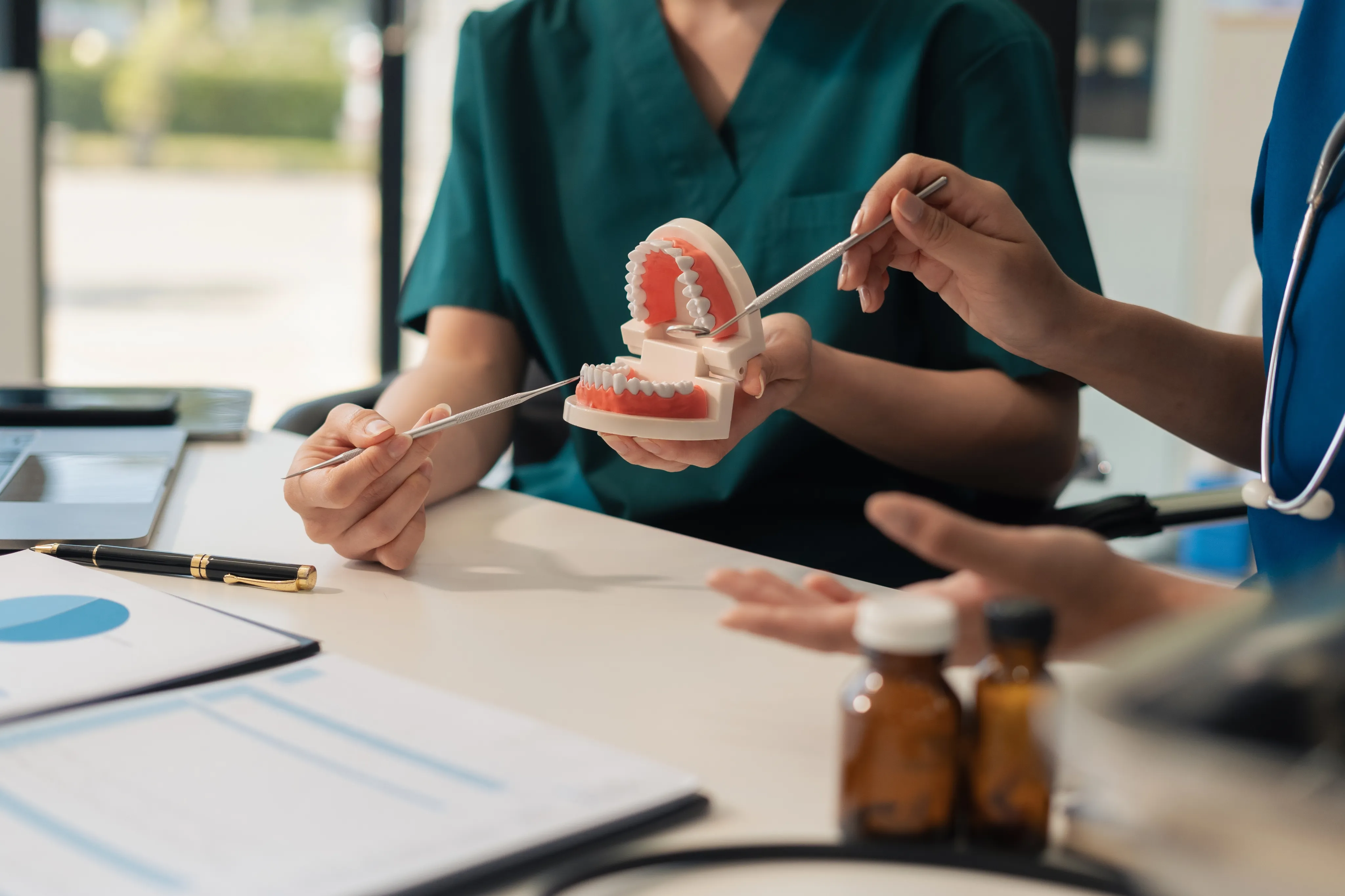
Dentures in Memphis, Tennessee, help restore function and appearance when many or all teeth are missing. This guide explains types of dentures, how they are made, benefits, and what to expect at each step so patients can make informed choices. If you are exploring a replacement option, you can schedule a visit with Dr. Jeffrey J. Ryu to review your needs.
Dentures Explained
Dentures are custom prosthetic teeth designed to replace missing teeth and the surrounding gum tissue. They can be removed for cleaning and maintenance. Options include full dentures for an entire arch, partial dentures when some natural teeth remain, and implant-supported dentures that connect to dental implants for added stability.
Materials have advanced, allowing modern dentures to look natural and fit more comfortably. Acrylic bases and lifelike teeth shades are selected to match facial features. Metal frameworks may be used in partial dentures for strength. Immediate dentures can be placed the same day teeth are removed, then refined as healing occurs.
Benefits of Denture Treatment
- Improved chewing so you can enjoy a wider range of foods.
- Clearer speech as tooth alignment and support are restored.
- Support for lips and cheeks to enhance facial profile.
- Custom design for fit, color, and tooth shape that looks natural.
- Removable design for easier hygiene and maintenance.
- Implant support available for added stability and confidence.
The Denture Process
The process starts with a consultation and oral exam. Health of gums, any remaining teeth, and bone structure are reviewed. This visit is a good time to discuss full versus partial dentures, immediate dentures, and implant-supported options.
Next, precise impressions and bite records are taken. Shade and tooth shape are selected based on facial features and goals. A wax try-in is often used to preview the look and bite alignment. Feedback at this stage helps refine comfort, esthetics, and speech. The final denture is then fabricated and fitted.
After placement, follow-up adjustments are common. Small pressure spots can appear as your mouth adapts. Relines or soft liners may be recommended during healing or as tissues change over time. Many patients benefit from a review visit a few weeks after delivery.
What to Expect Day to Day
It can take a short adjustment period to speak and chew comfortably. Reading aloud and starting with softer foods can help. Adhesives may provide temporary security while you adapt, though a proper fit is the most important factor. Mild soreness is possible early on and usually improves with adjustments.
Daily care is essential. Remove dentures at night unless advised otherwise, brush them gently with a non-abrasive cleanser, and soak as recommended. Clean your gums, tongue, and any remaining teeth each day to maintain oral health. Regular dental visits help monitor the fit and identify when a reline or replacement is needed.
Understanding Your Denture Options
- Full dentures: Replace all teeth in the upper or lower arch.
- Partial dentures: Fill gaps while clasping to nearby teeth.
- Immediate dentures: Placed right after extractions for same-day esthetics.
- Implant-supported dentures: Attach to implants for increased stability and chewing power.
Choosing among these depends on oral health, number of missing teeth, bone support, and personal goals. Many patients consider implant-supported dentures when seeking improved chewing and reduced movement.