
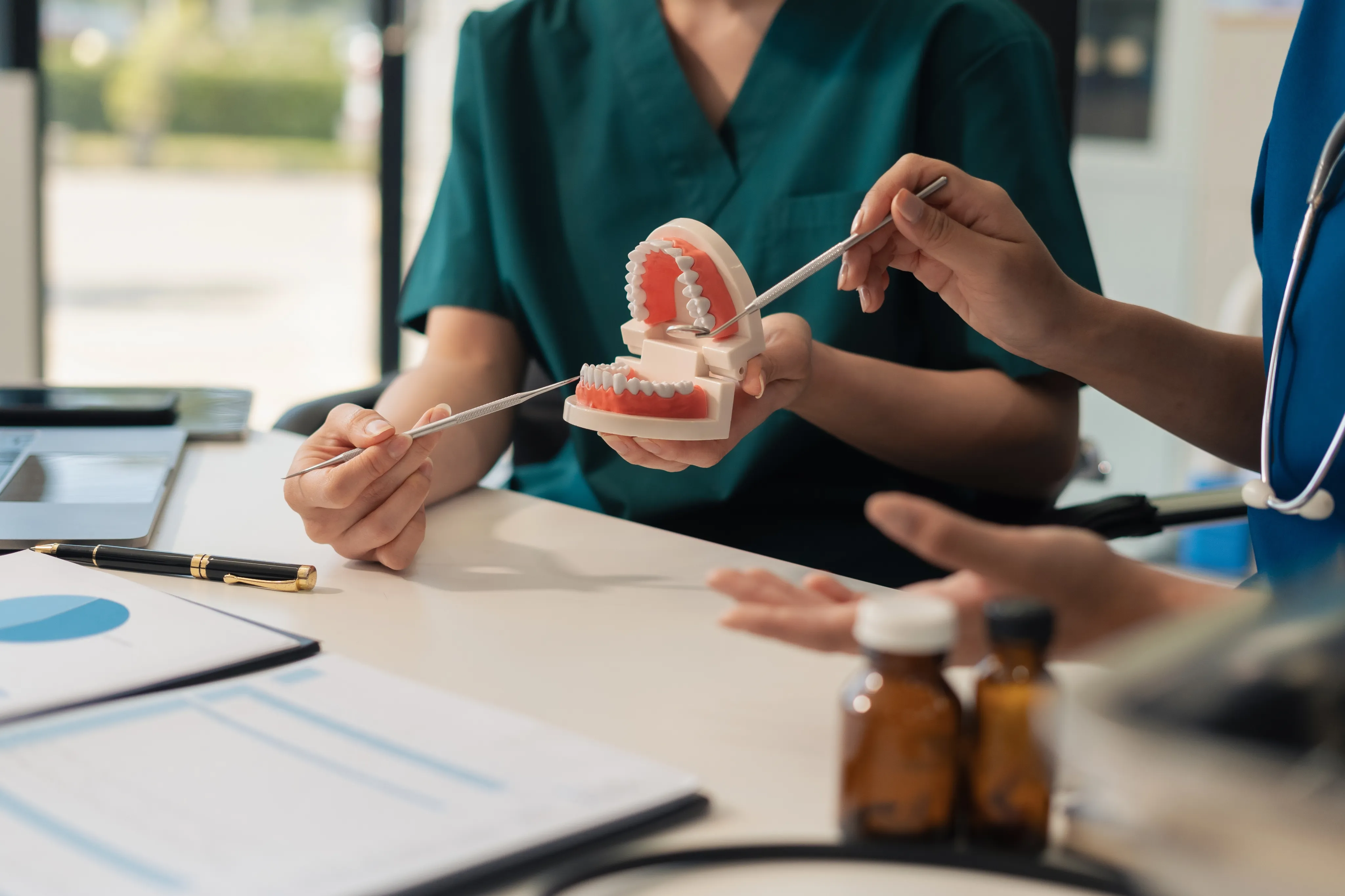
Teeth whitening in Memphis, Tennessee, helps lift stains and brighten natural enamel so your smile looks cleaner and more vibrant. At our local dental office, patients can explore safe, evidence-based options, including in-office treatment and custom take-home trays. This page explains how whitening works, who it helps, and what to expect before, during, and after care.
Teeth Whitening Explained
Professional teeth whitening targets stains on and within the enamel. Food, beverages, tobacco, and aging cause extrinsic stains that darken the tooth surface. Deeper intrinsic discoloration can form beneath the enamel due to certain medications, trauma, or long-term staining. Whitening gels use peroxide-based ingredients to break apart stain molecules so light reflects more evenly and teeth look lighter. Compared with over-the-counter strips or pastes, professional systems allow precise gel strength, better isolation of gums, and guidance to manage sensitivity.
Benefits of Professional Teeth Whitening
- Noticeable improvement in a short time, often within one visit or a few weeks with trays.
- Customized strength and wear time to match your enamel and sensitivity level.
- Even, natural-looking shade changes rather than patchy bright spots.
- Protection for lips and gums to reduce irritation during treatment.
- Guidance on maintenance so results last as long as possible.
How Professional Whitening Works
In-Office Treatment
In-office whitening is designed for fast, controlled results. After a shade reading, soft tissues are protected and a professional gel is applied. The gel stays on for several short cycles, with periodic checks to monitor comfort and color change. A single appointment typically lasts about an hour, and many patients see their teeth brighten several shades.
Custom Take-Home Trays
Custom trays are shaped to your teeth for a close, even fit. A measured amount of whitening gel is placed in each tray and worn as directed, usually for 30–60 minutes per day or overnight depending on the gel strength. Most people notice steady improvement over 10–14 days. Take-home care is convenient and makes future touch-ups simple.
What to Expect
Before whitening, a dental exam helps confirm that teeth and gums are healthy and that you are a good candidate. Any tartar or surface plaque should be cleaned to help the gel contact enamel evenly. During treatment, you may feel brief sensitivity or a “zing,” which usually fades soon after. After whitening, avoid strong pigments for 24–48 hours, including coffee, tea, red wine, berries, and dark sauces. Use a nonabrasive toothpaste for sensitivity if needed. With good home care and mindful habits, results often last 6–24 months.
Candidacy and Considerations
- Whitening works on natural enamel but does not change the shade of crowns, veneers, or fillings.
- Areas of decay, gum disease, or untreated cracks should be addressed before whitening.
- Severe intrinsic stains may need a longer regimen or a different cosmetic option.
- People prone to sensitivity can use a desensitizing toothpaste for two weeks before starting.