
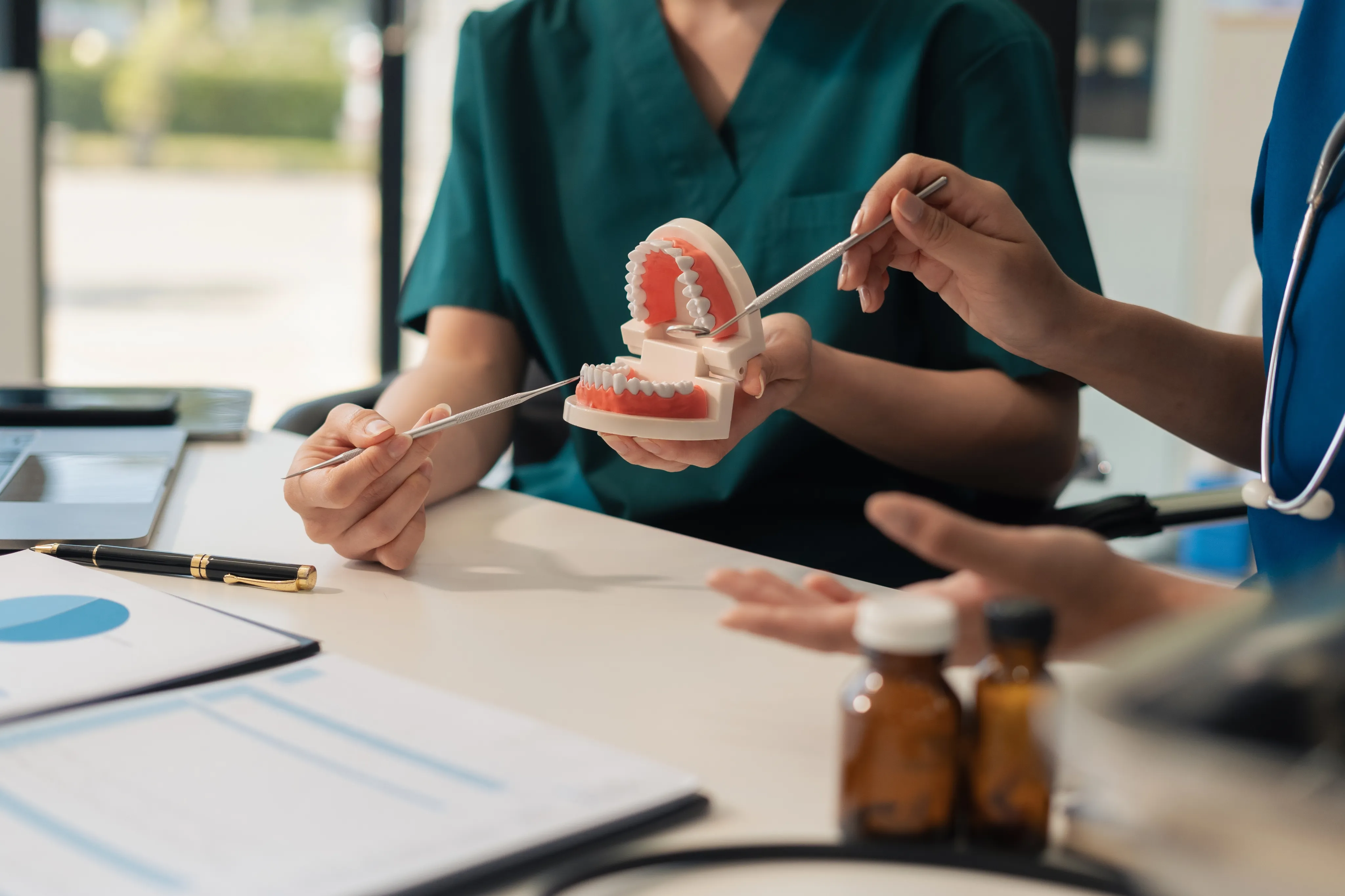
Scaling and root planing in Memphis, Tennessee, is a nonsurgical periodontal therapy, often called a deep cleaning, used to treat gum disease below the gumline. This page explains how the treatment works, when it is recommended, and what you can expect before and after care so you can make informed decisions about your gum health.
Scaling and Root Planing Explained
Gum disease develops when plaque and hardened tartar irritate the gums and create pockets that trap bacteria. Scaling removes plaque and tartar from the teeth and root surfaces above and below the gumline. Root planing then smooths the roots so the gums can reattach more easily and bacteria find fewer places to cling. This approach is considered non-surgical periodontal therapy and is a first-line treatment for mild to moderate periodontitis.
Typical signs that suggest a deep cleaning may help include bleeding gums, persistent bad breath, gum tenderness, recession, and pocket depths of 4 millimeters or more measured during a periodontal exam. X-rays may also show tartar deposits below the gums. Patients who notice these changes benefit from timely evaluation to limit progression.
How Scaling and Root Planing Can Help You
- Removes bacteria and tartar that brushing and regular cleanings cannot reach.
- Reduces gum inflammation, bleeding, and pocket depths.
- Helps gums tighten around teeth to improve stability.
- Improves breath by lowering bacterial load.
- May reduce the risk of future bone loss around teeth.
Your Deep Cleaning Process
The exact plan depends on your exam findings, but most visits follow a similar outline:
- Assessment and charting: A periodontal evaluation measures pocket depths and notes areas of inflammation.
- Comfort measures: Topical anesthetic and local anesthesia are used so the procedure is well tolerated.
- Scaling: Ultrasonic and hand instruments remove plaque and tartar above and below the gumline.
- Root planing: Root surfaces are smoothed to discourage bacterial buildup and support gum reattachment.
- Antimicrobial therapy: Some sites may be irrigated or treated with localized antibiotics if indicated.
- Polishing and instructions: Teeth are polished and home care guidance is reviewed.
Depending on the number of areas involved, treatment may be completed in one longer visit or over two to four shorter appointments. A follow-up evaluation with our dentist, often scheduled 4 to 6 weeks later, checks healing and pocket depth changes.
What to Expect Before and After
Before treatment, a periodontal exam confirms the diagnosis and maps out the sites requiring therapy. Medication lists are reviewed, and questions are answered so you know how the visit will proceed.
After treatment, it is common to notice mild tenderness, temporary gum soreness, and tooth sensitivity to cold. These sensations usually improve over several days. Many patients return to normal routines the same day.
- Pain control: Over-the-counter pain relievers can be used as directed.
- Oral hygiene: Brush gently twice daily with a soft brush, clean between teeth with floss or interdental brushes, and use any prescribed rinses as directed.
- Diet tips: Choose softer foods and avoid very hot, spicy, or crunchy items for the first day.
- Sensitivity care: Desensitizing toothpaste can help reduce cold sensitivity.
- Smoking: Avoid tobacco to support healing.
Healing continues over several weeks as inflammation decreases and gums tighten. A re-evaluation determines if pocket depths have improved or if additional therapy is needed. Many patients transition to periodontal maintenance cleanings every 3 to 4 months to keep gums healthy and protect results.
Who Is a Candidate?
Scaling and root planing is recommended for people with early to moderate periodontitis, measurable pocketing, and tartar below the gumline. It is also appropriate when bleeding and swelling persist despite regular cleanings. In advanced cases with deep pockets or bone loss, this therapy may be the first step before considering surgical options.
Risks and Considerations
- Temporary tooth sensitivity and gum soreness can occur.
- Gums may appear slightly shorter as swelling subsides and tissues tighten.
- Results depend on thorough home care and consistent maintenance visits.
- Some areas may need retreatment or referral for surgical procedures if pockets remain deep.